Interview
Bordeaux Fair reinvents itself: agriculture at the heart of the event
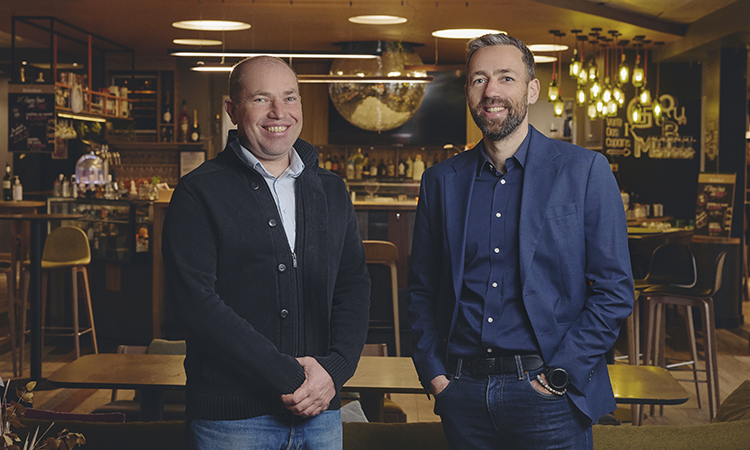
The 2026 Foire de Bordeaux marks a new step in the evolution of the event. With a redesigned format, new experiences for visitors, and a more immersive approach, this renewal edition also builds on a long-standing partner: the New Aquitaine Agricultural Show. Aymeric Peneau, Director of the Bordeaux Fair, and François Trignol, General Commissioner of the Salon de l’Agriculture Nouvelle-Aquitaine, share their vision of this strategic collaboration. A success?
This 2026 edition of the Foire de Bordeaux is being presented as one of renewal. How is it reinventing itself?
Aymeric Peneau (AP): It truly marks a turning point. First of all, in its format: the Foire will now open on Friday, with a free opening day until 7 p.m. It will be more festive, with three late-night events featuring a fireworks display, a blind test, and several concerts, including a performance by Bon Entendeur, accessible with a Foire ticket valid for 10 days, as well as a free RFM Music Live.
We have also redesigned the layout to offer a more compact and convivial Foire. Movement between the halls has been improved, and a new central area is being introduced: the Place de la Foire, a true hub bringing together exhibitors, producers, and visitors in a spirit of sharing. Finally, and not least, the Salon de l’Agriculture Nouvelle-Aquitaine will now take center stage in Halls 1 and 4.
In this new dynamic, what role does the Salon de l’Agriculture Nouvelle-Aquitaine play?
AP: The Salon de l’Agriculture is a long-standing partner of the Foire de Bordeaux. It is even one of its most distinctive features, making the event quite unique among major fairs. This gathering is both a professional competition and a meeting place for agricultural sectors, as well as for visitors. It is also an educational space dedicated to agriculture, addressing key topics such as employment and training.
These values strongly align with our vision: sharing, conviviality, and strong regional roots. In many ways, the Foire de Bordeaux represents the entire Nouvelle-Aquitaine region. The Salon de l’Agriculture perfectly embodies this regional dimension through the diversity of productions and expertise it showcases.
Salon de l’Agriculture Nouvelle-Aquitaine: an event within the event
Long present within the Foire de Bordeaux, the show is taking a new step in its integration into the visitor experience. More visible than ever, it is becoming one of the key pillars of the 2026 edition.
For François Trignol, recently appointed General Commissioner of the Salon de l’Agriculture Nouvelle-Aquitaine, this evolution represents an opportunity: to strengthen the dialogue between the agricultural sector and the general public, while reinforcing the show’s position as a major gathering for regional industries.
François Trignol, you have just been appointed General Commissioner of the Salon de l’Agriculture Nouvelle-Aquitaine. Why did you accept this responsibility?
François Trignol (FT): I was Director of the Corrèze Chamber of Agriculture for many years. When I stepped down from that role to become a farmer, its president, Bernard Layre, suggested that I take over from Bruno Millet to support the show. I quite naturally accepted this challenge.
This show has a unique identity, being associated with a well-established fair. Its ability to connect agriculture with an urban audience was a strong motivation for me to take on this role.
How would you define the identity of the Salon de l’Agriculture Nouvelle-Aquitaine today?
FT: Historically, fairs were closely linked to agriculture. Over time, they have shifted more towards housing, home equipment, and consumer goods. Agriculture has remained present, but sometimes somewhat on the sidelines. Today, the ambition is to fully reintegrate the show into the Foire.
We want to return to a model where the discovery of the agricultural world, gastronomy, and local products are directly connected with the public. The idea is simple: bringing the farm into the city. In Bordeaux, visitors will have the opportunity to discover the full diversity of livestock farming - cattle, sheep, horses, poultry - as well as the region’s rich gastronomy.
We also place great importance on young people, as agricultural high schools from across the region compete in a challenge that highlights vocational training in the sector.
What are the ambitions of the show for this edition?
FT: The show aims to explain the different sectors, production methods, and the realities of the profession. It is important for us to pass this knowledge on to younger generations. Visits will be organized for schools in the Bordeaux area to help them discover the region’s various agricultural sectors.
The show will also highlight local products and expertise, notably with the presence of the Agence de l’Alimentation Nouvelle-Aquitaine (AANA) and many professional sectors. Finally, we aim to further strengthen the connection between agriculture and gastronomy in the future.
How does the Salon de l’Agriculture Nouvelle-Aquitaine contribute to making the Foire de Bordeaux a strategic event for the region?
FT: The show plays an important role for agricultural sectors and public decision-makers. It is a moment when all stakeholders - elected officials, industry leaders, cooperatives, and agricultural organizations - can come together.
The goal is to make this event the leading institutional agricultural gathering in Nouvelle-Aquitaine. It is a place where key issues for the future can be discussed: water management, the evolution of production systems, investment, and the development of agricultural sectors. These discussions are essential to help shape the future of regional agriculture in the years to come.